
If you ask five people who owns S3, you’ll get five confident answers…and none of them will be correct. Platform says it’s whoever created the bucket (that person left last year). Finance says it’s whoever pays for it, but the bill is a single line item labeled “S3” with absolutely no context. Security assumes someone else is reviewing access. And the actual answer (the one nobody says out loud) is…no one owns it. S3 doesn’t fail loudly. It just…accumulates.
If you’re an AWS admin or solutions architect, you already know how this story ends. The bill spikes so you’re deep in Cost Explorer trying to reverse-engineer what changed. Someone needs access and you’re deciphering a bucket policy written in 2022 by someone who now works for your competitor. A security review hits and suddenly you’re explaining why there are 220 buckets and only a handful have a clear purpose.
You didn’t volunteer to own S3. You inherited it. And that’s the real problem: infrastructure everyone depends on but no one is accountable for.
Why S3 Ownership Disappears
S3 is exceptionally good at avoiding ownership. It does it in ways that feel completely reasonable at the time.
1. Creation is frictionless
Creating a bucket takes seconds. No ticket, no approval, no design review. Compare that to spinning up a database or an EC2 fleet, where process usually forces someone to take responsibility. S3 has no such moment.
A developer needs a place to keep logs or build artifacts. He creates a bucket and moves on. Repeat that across teams and years, and you end up with hundreds of buckets, few of which were ever explicitly “owned.”
2. Costs grow quietly
S3 rarely breaks. It just gets more expensive.
- Wrong storage classes.
- No lifecycle policies.
- Old versions piling up.
- Abandoned multipart uploads.
None of this triggers an alarm. It silently nudges your bill upward month after month. With S3 spend aggregated, no single bucket looks bad enough to force accountability. Diffuse cost means diffuse responsibility. That’s another way of saying: none.
3. Institutional knowledge evaporates
The person who set up your bucket structure understood it. Then they left. What remains is a layout that sorta makes sense, at least until you need to change something. New engineers don’t want to risk breaking unknown dependencies (AKA tech debt), so they add new buckets instead of touching old ones. Ownership doesn’t transfer. It dilutes. After a few cycles of turnover, no one understands the full picture. Which is operationally identical to no one owning it.
Why This Is Worth Fixing Now
Unowned S3 isn’t just messy. It’s actively expensive.
Hidden cost waste
A meaningful percentage of S3 spend is waste. Orphaned data, bad tiering, and unused buckets. You can’t optimize what you can’t attribute.
Access and security risk
Permissions accumulate the same way data does: gradually and without cleanup. Buckets without owners don’t get reviewed. That’s how you end up with over-permissioned access that only gets noticed during an audit (or worse) an incident.
Your time
Every time you hunt for an object, untangle access, or explain a cost anomaly, you’re paying the “no owner” tax. It’s not tracked anywhere, and it adds up fast.
What Actually Fixes It
This isn’t a tooling problem. Ownership only works if it’s enforceable and visible.
1. Assign ownership at the bucket level.
Account-level ownership is too abstract. Buckets are where decisions happen: lifecycle policies, permissions, storage classes. Each bucket needs one clear owner ( a person or a team).
2. Make ownership queryable with AWS Tags.
If you can’t query ownership, it doesn’t exist in practice. Require tags for:
- Owner
- Purpose
- Cost center
Make tagging mandatory at creation, not a cleanup project you’ll “get to later.”
3. Give owners visibility they’ll actually use.
This is where most efforts fail. If ownership requires clicking through the AWS Console, exporting reports, and stitching together Cost Explorer data, it won’t stick. No one maintains something that takes hours to understand. Ownership needs to be lightweight enough to become habit. That’s where tooling becomes useful. Define ownership and make it practical.
The Point
Unowned infrastructure doesn’t get optimized. No one is accountable for the outcome. Every postponed cleanup, every confusing permission set, every unexplained cost spike traces back to the same missing answer: who owns this? Assign ownership first. Then make it easy to act on. If your team can’t clearly answer who owns S3, it’s worth fixing before your next audit (or your next surprise bill) forces the issue.

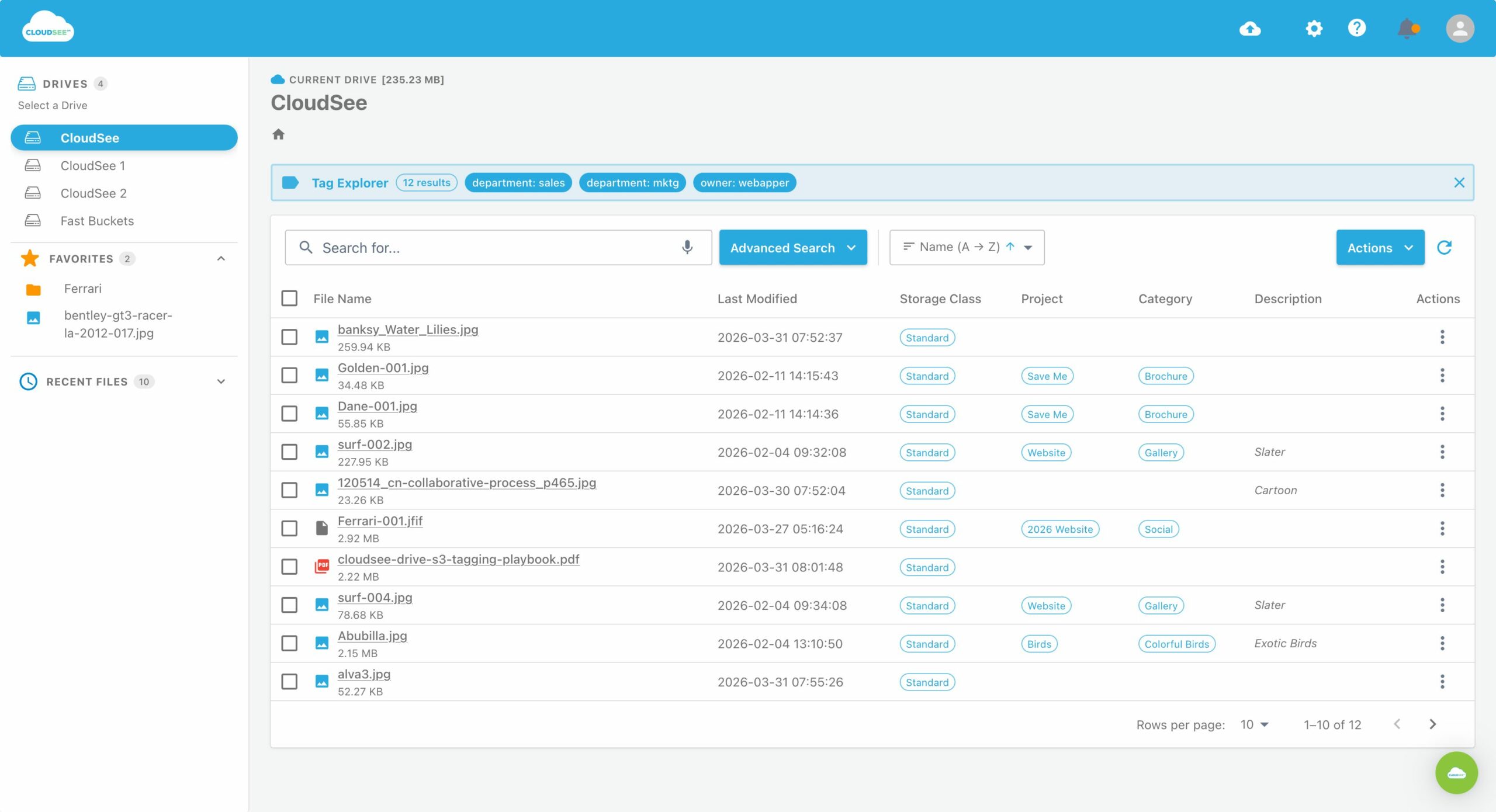
CloudSee Drive gives bucket owners a fast, browser-based view of what’s in S3. It indexes large buckets quickly, surfaces structure and objects without endless clicking, and makes tagging and organization visible in one place. The result: ownership that takes minutes instead of hours. VisionAST reduced S3 management time by 75% using this approach. They didn’t change responsibility, just made it manageable.
Leave A Comment