
You didn’t budget for it. You didn’t plan for it. But there it is on your AWS bill: a line item that grows every month while you’re focused on bigger priorities. Egress fees.
They’re not a billing error. They’re a design signal, a warning that your architecture is letting data leave AWS in the most expensive way possible. For many teams running workloads on Amazon S3, that signal has been flashing red for months. Let’s look at how to stop paying it.
The Hidden AWS Cost Nobody Audits
S3 storage costs get plenty of attention (especially from us!). With per‑GB pricing near pennies, administrators often treat it as background noise in their budgets. What’s frequently overlooked is what happens after you store it…when that same data starts moving.
Outbound data transfer from S3 to the internet runs about $0.09/GB for the first 10TB each month. That sounds OK…until traffic spikes. Serving 50TB of assets to global users means roughly $4,000 per month in egress alone, for data you already paid to store.
There are also request costs. Every `GET` on a public S3 bucket is billable. Popular apps generate millions of requests daily, which quietly compounds the total. AWS isn’t overcharging. The problem is that direct‑to‑S3 delivery was never built for scale, and the pricing model penalizes you for doing it anyway.
A Half-Day Fix Cuts 98% of Egress Costs
A startup recently shared a simple case study. They were paying $250 per month for 2.6TB of S3 downloads, serving content directly from buckets. The architecture was reliable but expensive.
The fix? Put Amazon CloudFront in front of S3.
- Data transfer from S3 to CloudFront (same region) is free.
- CloudFront serves users from edge locations worldwide at lower egress rates.
The result: a 98% drop in egress costs overnight, lower latency, improved redundancy, and no code changes.
AWS designed it this way. CloudFront‑fronted S3 delivery is the reference pattern. Skipping it works for MVPs, but it turns into an unnecessary tax at scale.
Three Egress Leaks Worth Auditing Today
If your S3 bill is climbing faster than your storage growth, start here:
1. Direct Internet Egress
Any public S3 bucket serving content without CloudFront is racking up full egress charges. Add a distribution; the AWS‑internal traffic from S3 to CloudFront is free.
2. NAT Gateway Routing
EC2, Lambda, and ECS tasks hitting S3 through a NAT Gateway incur both Gateway and S3 egress ($0.045/GB + transfer). Use a VPC Gateway Endpoint for S3. It’s free and eliminates the double‑charge.
3. Inter‑region Transfers
Cross‑region replication or access generates storage and egress fees both ways. Review multi‑region strategies and confirm whether cross‑region reads are really necessary.
Egress Is an Architecture Problem, Not a Pricing Problem
Spiking egress costs aren’t a signal to negotiate with AWS; they’re diagnostics about design. High S3 egress means users are bypassing cache layers, traffic is routing through NAT, or data flows ignore regional alignment. It’s an architecture issue.
The fixes are usually quick:
- Deploy CloudFront (free for S3 origin transfer).
- Configure S3 Gateway Endpoints.
- Set lifecycle rules to move cold data into Glacier or IA before retrieval events start billing you at premium rates.
Visibility is key. Without a clear view into which buckets and prefixes generate your biggest outbound traffic, optimization is blind.
Know Your Buckets Before You Fix Your Bill
When you can see usage patterns, egress fixes become obvious. Egress fees are the invoice for architectural shortcuts. Fortunately, most of those shortcuts can be fixed in an afternoon.
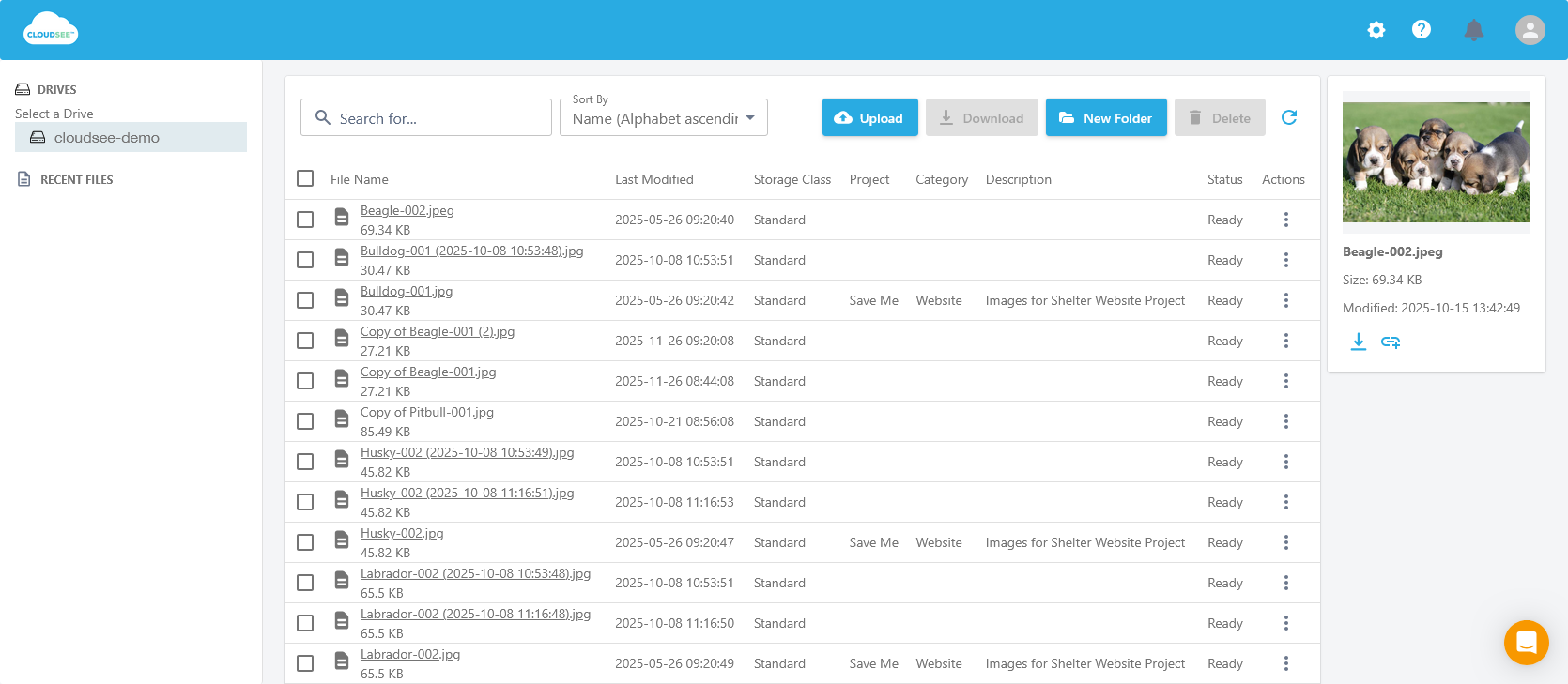
CloudSee Drive is a browser-based S3 file manager built for AWS teams who need real visibility into their storage.
Leave A Comment